


 Feedback

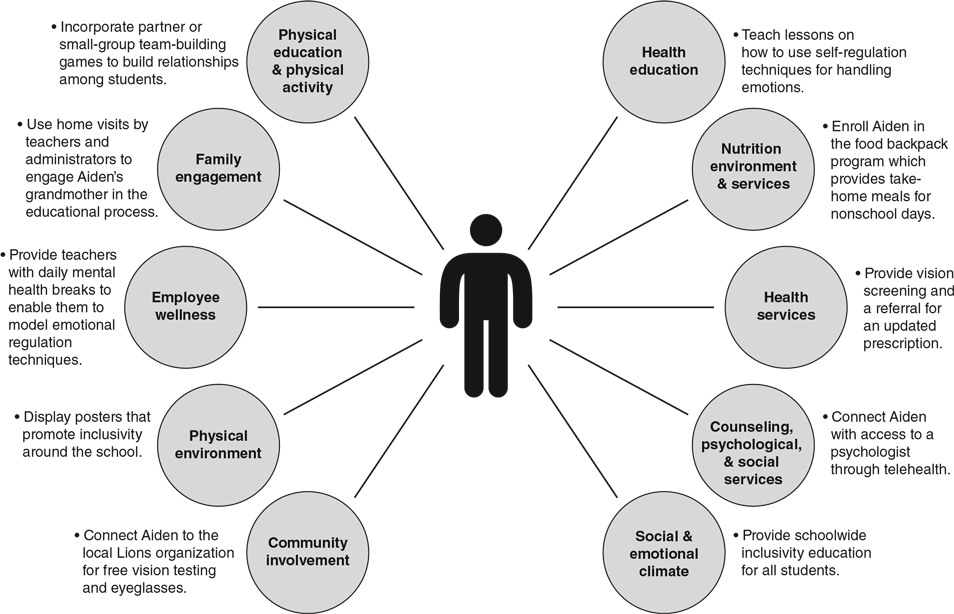
Case Study: Using the WCSS model to address the needs of the whole child
This is an excerpt from Promoting Health and Academic Success 2nd Edition by David A. Birch,Donna M. Videto,Hannah P. Catalano.
By Michele Wallen
Aiden, age 14, lost both his parents in a house fire at age 7. He lives in a one-bedroom apartment with his grandmother, who has a physical disability and uses a wheelchair. Their only source of income is his grandmother’s monthly Social Security check. Aiden experiences frequent headaches because the prescription in his glasses is outdated. Aiden is bitter about his circumstances and is known to have violent outbursts. His peers avoid contact with him. He has little desire to do well in school and only attends so he can eat.
How might each of the components of the WSCC model be used to support Aiden from a Whole Child perspective?
SHOP

Get the latest insights with regular newsletters, plus periodic product information and special insider offers.
JOIN NOW